Building Scalable SaaS Architecture: Modern Approaches for Enterprise Growth

Essential best practices for developing software-as-a-service platforms that can handle millions of users. Learn microservices, cloud-native design patterns, and performance optimization techniques that industry leaders use to scale their applications.
Designing SaaS applications for scale requires careful architectural planning from day one. The difference between successful platforms and those struggling with growth often lies in their foundational architectural decisions. Modern SaaS platforms like Salesforce, Zoom, and Slack serve millions of users simultaneously while maintaining sub-second response times—this level of performance requires sophisticated architecture patterns and careful technology choices.
SaaS Architecture Complexity by Scale
| User Scale | Architecture Pattern |
|---|---|
| 1K–10K Users | Monolithic + Cache |
| 10K–1M Users | Microservices + CDN |
| 1M+ Users | Distributed + Edge |
The Evolution of SaaS Architecture
SaaS architecture has evolved significantly over the past decade. Early SaaS applications were often monolithic, hosted on single servers, and struggled with scale. Today’s cloud-native architectures leverage containerization, microservices, and edge computing to deliver exceptional performance at any scale.
The shift to cloud-native isn’t just about hosting—it’s about fundamentally rethinking how applications are designed, deployed, and operated. Companies like Netflix transformed from DVD-by-mail to streaming billions of hours monthly by rebuilding their entire architecture around cloud-native principles.
Core Scalability Principles
1. Stateless Application Design
Stateless applications don’t store user session data locally, making them infinitely scalable. Each request contains all necessary information, enabling load balancers to route requests to any available server. This principle is fundamental to horizontal scaling.
Stateless Benefits:
- Horizontal scaling without session affinity
- Server failures don’t affect user sessions
- Load balancers can route freely
- Auto-scaling works seamlessly
Implementation Requirements:
- External session storage (Redis)
- Stateless authentication (JWT)
- Database-backed configuration
- CDN for static assets
2. Microservices Architecture
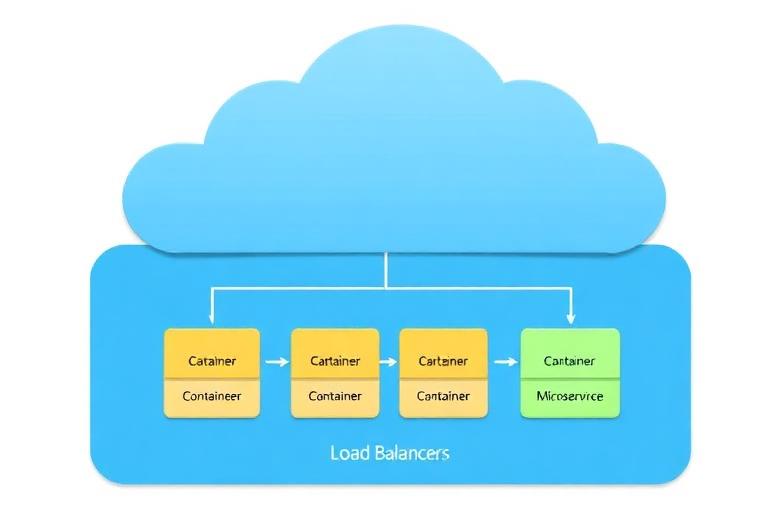
Breaking monolithic applications into smaller, independent services enables teams to develop, deploy, and scale components independently. Netflix operates over 2,500 microservices, allowing them to deploy code changes thousands of times per day without affecting the entire platform.
Service Decomposition Strategy
Effective microservices decomposition follows domain-driven design principles:
- User Management Service: Authentication, profiles, permissions
- Billing Service: Subscriptions, payments, invoicing
- Notification Service: Email, SMS, push notifications
- Analytics Service: Usage tracking, reporting, insights
- Core Business Logic: Application-specific functionality
3. Database Architecture for Scale
Database design significantly impacts SaaS scalability. Multi-tenant architectures must balance data isolation, performance, and cost. Leading SaaS companies use a combination of strategies based on their specific requirements.
Multi-Tenancy Patterns:
- Shared Database, Shared Schema: Most cost-effective, tenant data separated by ID
- Shared Database, Separate Schema: Better isolation, moderate complexity
- Separate Database per Tenant: Maximum isolation, highest cost
Performance Optimization:
- Read Replicas: Distribute read queries across multiple databases
- Database Sharding: Horizontal partitioning for massive datasets
- Connection Pooling: Efficient database connection management
Modern Technology Stack Deep Dive
Frontend Architecture
Modern SaaS frontends must be responsive, performant, and accessible across devices. Single Page Applications (SPAs) with server-side rendering provide the best user experience while maintaining SEO benefits.
| Technology | Use Case | Benefits | Scalability |
|---|---|---|---|
| Next.js | Full-stack React | SSR, API routes, optimization | Excellent |
| React + Vite | Client-side apps | Fast builds, modern tooling | Good |
| Vue.js + Nuxt | Progressive apps | Developer-friendly, SSR | Good |
Backend Services Architecture
Backend architecture determines application scalability, maintainability, and performance. Event-driven architectures with message queues enable loose coupling and high throughput processing.
API Gateway Pattern
API gateways provide a single entry point for all client requests, handling cross-cutting concerns:
- Authentication and authorization
- Rate limiting and throttling
- Request routing and load balancing
- API versioning and transformation
- Monitoring and analytics
- Caching and response optimization
Event-Driven Architecture
Asynchronous communication between services improves scalability and resilience. Example User Registration Flow:
- User submits registration form
- User service creates account and publishes “UserCreated” event
- Email service listens for event and sends welcome email
- Analytics service records new user metrics
- Billing service sets up trial subscription
Performance Optimization Strategies
Caching Architecture
Effective caching strategies can reduce response times by 10–100x while significantly reducing database load. Multi-layer caching approaches provide the best performance improvements.
Client-Side Caching:
- Browser cache for static assets
- Service worker for offline capability
- Local storage for user preferences
- Application-level state management
Server-Side Caching:
- Redis for session and application data
- CDN for global content distribution
- Database query result caching
- API response caching with TTL
Auto-Scaling and Load Balancing
Container orchestration platforms like Kubernetes enable automatic scaling based on demand metrics. Horizontal Pod Autoscaling (HPA) and Vertical Pod Autoscaling (VPA) ensure optimal resource utilization.
Case Study: Spotify’s Auto-Scaling
Spotify serves 456 million monthly active users with their cloud-native architecture:
- Peak Load Handling: 10x traffic spikes during new releases
- Auto-Scaling Response: New instances deployed in under 30 seconds
- Resource Optimization: 40% cost reduction through intelligent scaling
- Global Distribution: 180+ CDN locations for sub-50ms latency
Security and Compliance Architecture
Zero-Trust Security Model
Modern SaaS applications implement zero-trust security, where every request is authenticated and authorized regardless of origin. This approach provides better security than traditional perimeter-based models.
Network Security:
- TLS 1.3 encryption
- Web Application Firewall
- DDoS protection
- VPN for internal access
Application Security:
- JWT authentication
- Role-based access control
- Input validation/sanitization
- OWASP compliance
Data Security:
- Encryption at rest
- Field-level encryption
- Access audit logging
- GDPR compliance
Monitoring and Observability
Comprehensive monitoring enables proactive issue detection and resolution. The three pillars of observability—metrics, logs, and traces—provide complete visibility into application behavior.
Key Metrics to Monitor:
- Response Time: API and page load times
- Throughput: Requests per second
- Error Rate: 4xx and 5xx HTTP responses
- Resource Usage: CPU, memory, disk
- Business Metrics: User actions, conversions
Monitoring Stack:
- Prometheus: Metrics collection and alerting
- Grafana: Visualization and dashboards
- ELK Stack: Log aggregation and analysis
- Jaeger: Distributed tracing
- Datadog/New Relic: All-in-one observability
Deployment and DevOps Strategies
CI/CD Pipeline Architecture
Automated deployment pipelines enable rapid, reliable releases while maintaining quality standards. Leading SaaS companies deploy multiple times per day with zero-downtime deployment strategies.
Modern CI/CD Pipeline Stages:
- Code – Git workflows, PR reviews
- Build – Automated testing, security scans
- Deploy – Blue-green, canary releases
- Monitor – Health checks, rollback triggers
Performance Benchmarks and Success Metrics
Leading SaaS platforms achieve remarkable performance metrics through careful architectural design and optimization:
| Metric | Benchmark |
|---|---|
| Uptime SLA | 99.99% |
| API response time (95th percentile) | < 100ms |
| Concurrent users capacity | 10M+ |
Future Trends and Emerging Technologies
The future of SaaS architecture is being shaped by emerging technologies and changing user expectations:
- Edge Computing: Processing data closer to users for ultra-low latency
- Serverless Architecture: Function-as-a-Service for cost-effective scaling
- AI-Powered Operations: Machine learning for predictive scaling and optimization
- WebAssembly: Near-native performance for browser applications
- Quantum-Safe Cryptography: Preparing for post-quantum security
Ready to Build Your Scalable SaaS?
Building scalable SaaS architecture requires deep expertise in cloud-native technologies, performance optimization, and security best practices. Our team has helped dozens of companies scale from startup to enterprise.
- Architecture Review: Assess your current architecture and plan for scale
- Migration Strategy: Move from monolith to microservices safely
Need help building a scalable SaaS architecture? Discuss Your SaaS Project